


6 Tremendous Tokushima Ramen Shops
Updated: Sep 12
Shikoku has a reputation as udon country. Spend a night out in Tokushima City, though, and you'll find a different noodle obsession simmering: Tokushima Ramen. Get it right and you're looking at a distinctively brown tonkotsu-shoyu broth, a raw egg cracked in for creaminess, and pork belly cut firmer than your typical chashu.

It's the bowl locals dive into after a long night out — and one I've gone back for plenty of times myself.
I've eaten my way through six shops chasing down the real thing. Four stick close to the traditional style. Two break from it entirely. Here's where to go for both.
Classic Tokushima Ramen
Todai (ラーメン東大 大道本店)
Todai stays open until 4 AM, and plenty of Tokushima locals dive headfirst into a bowl after a night of drinking.

The salty, fatty broth is distinctively Tokushima brown, a blend of white tonkotsu (pork bone) and a dark soy sauce. It's also quite sweet in flavor. The pork belly topping here is firmer than your typical chashu.
You'll be asked whether you want ninniku (garlic) or not — at the end of a long night, why not add some? And don't skip the raw egg; it adds a layer of creaminess.
Inotani (いのたに 本店)
Inotani has been around since 1966. They're a Tokushima institution, believed to be the originators of the style. The broth is less salty than Todai's, but still super tasty, with that distinct oily richness.

Pretty cool: you might notice staff placing the renge (ramen soup spoon) on customers' empty water glasses — that's how they track who's already ordered.
At just 20 cm, Tokushima ramen's straight noodles are shorter than the standard 30 cm, so they're easier to slurp in one go. Order rice if you're into it — Tokushima ramen is meant to be enjoyed with a bowl on the side.
Wanwanken (王王軒)
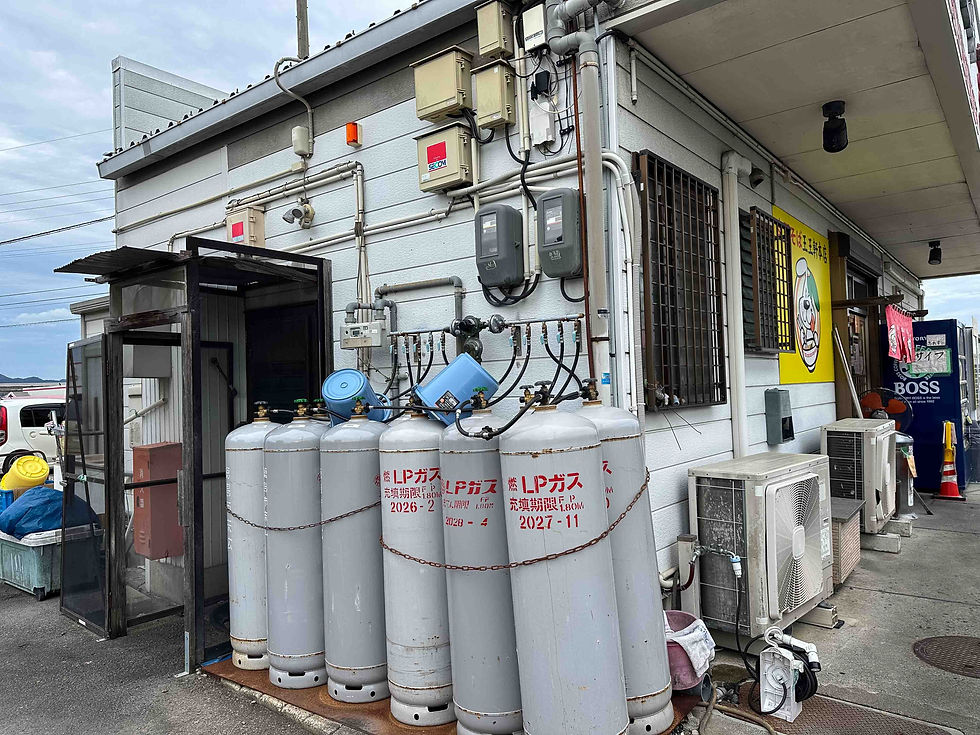
If Todai and Inotani are the gateway, Wanwanken is where things get serious. This is the porkiest bowl of the bunch — you can smell the tonkotsu simmering the second you walk in, like someone's running a fog machine off a vat of bone broth. Look for the row of huge gas canisters lined up outside; that's the tell for a proper marathon boil.

The broth carries that same funky, meaty depth all the way through. It's all heavier and more overtly porky than either of the two above. If you want the most concentrated hit of what makes Tokushima ramen Tokushima ramen, this is probably it.
Okuya (奥屋)
Okuya takes the opposite approach — less funk, more finesse. The seasoning does more of the talking here, and the bowl comes across noticeably more refined and restrained than Wanwanken's all-out pork assault.

One nice touch: you can order kimchi on the side, and it works, cutting through the richness rather than fighting it. The chashu also leans chewier with bigger pieces. This is the bowl I could see myself eating on a random Tuesday rather than saving for a special occasion.
Worth a Detour If You Want Something Different
Awaya (阿波屋)
If you want to avoid the crowds at Todai or Inotani, try Awaya. It's not as representative of traditional Tokushima ramen, but it's still delicious.

There are two options: Awaya Soba or Chukasoba (pictured), the lighter of the two since it skips the seabura (pork back fat). Both are great.
The broth leans sweet over salty, with thin, straight noodles full of kansui. It comes with sudachi on the side — a sour Tokushima citrus similar to lime. Add it and the broth turns fragrant, with the acidity cutting through the sweetness for an even better bowl.
Something different — adding to Awaya:
Dou no Ura (堂の浦)
Just when you think you've got Tokushima ramen figured out, Dou no Ura throws a curveball: a shio (salt) ramen built on sea bream instead of pork. It's a real outlier in a city known for rich, brown tonkotsu-shoyu broths — it even comes topped with a piece of dried sea bream for good measure.

Visually, it's minimal — thin noodles, a clear broth, nothing flashy. The flavor follows suit: delicate, but not so delicate that it disappears. Order this after a day of heavier bowls and it'll reset your palate.
Six bowls, two very different sides of the same city. If you only have time for one stop, go classic — Todai, Inotani, Wanwanken, and Okuya will give you the real Tokushima Ramen experience.
But if you've got room for a second bowl, Awaya and Dou no Ura are proof this city can wander outside its own tradition and still get it right.
Curious about exploring Japan beyond ramen? Our travel brand Japan Food Travels covers food itineraries, hidden gems, and regional dining across Japan.


